Yoga and Text Neck
Elizabeth Adolphson | FEB 17, 2025
yoga
yogafortensionrelief
yogaforbetterposture
yogafeelsgood
thatyogafeeling
Yoga and Text Neck
Elizabeth Adolphson | FEB 17, 2025
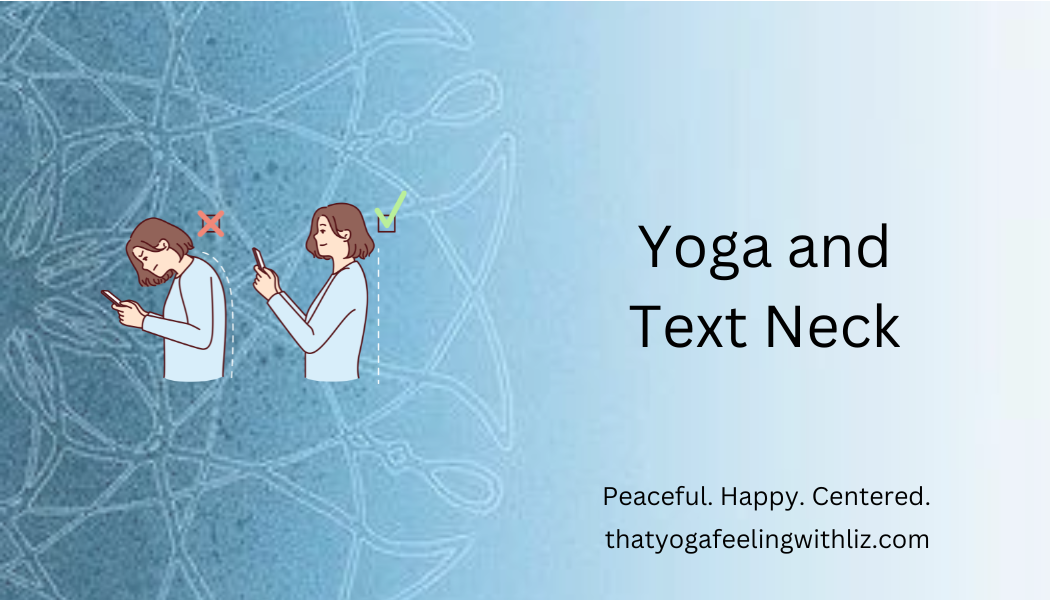
Forward Head Syndrome (FHS) – aka “Text Neck”
Forward Head Syndrome, also known as "text neck," is a postural condition where the head shifts forward, the shoulders round forward, and the upper spine rounds forward. This condition has become increasingly common due to prolonged activities such as looking down at smartphones, computers, and other devices. It is affecting all of us, no matter what age you are.
When you hunch forward, the load on your neck increases; instead of just supporting the weight of your head (10-12 lbs.), your neck must deal with 40 to 60 lbs., depending on how much you tilt your head forward. Unfortunately, the common position when using smartphones is with your neck tilted forward between 40 and 60 degrees,
In good, optimal posture, the ears are aligned over the shoulders, the shoulders aligned over the hips and the spine is lengthened which places less stress on the intervertebral discs. The forward positioning of the head places significant strain on the muscles, ligaments, and spine. Over time, this can lead to chronic neck pain, headaches, shoulder discomfort, and even spinal misalignment. Additionally, FHS can reduce lung capacity, limit range of motion in the neck, and lead to nerve compression, causing numbness or tingling in the arms.
With texting as the most common form of communicating, or working in front of a screen, it is no surprise that the forward head posture has become an epidemic. By the age of 35, more than six out of ten people will be diagnosed with forward head posture by a chiropractor or physical therapist.
With timely intervention, the effects of Forward Head Syndrome can be relieved, and posture can be improved to reduce discomfort and prevent long-term damage.
How Can Yoga Help?
Yoga poses can help to bring the head, neck, and spine into alignment by strengthening and stretching the neck and back muscles. Yoga also cultivates body awareness so you may notice more quickly when you start to slouch and can take steps to correct your posture.
Elizabeth Adolphson | FEB 17, 2025
Share this blog post
 OfferingTree