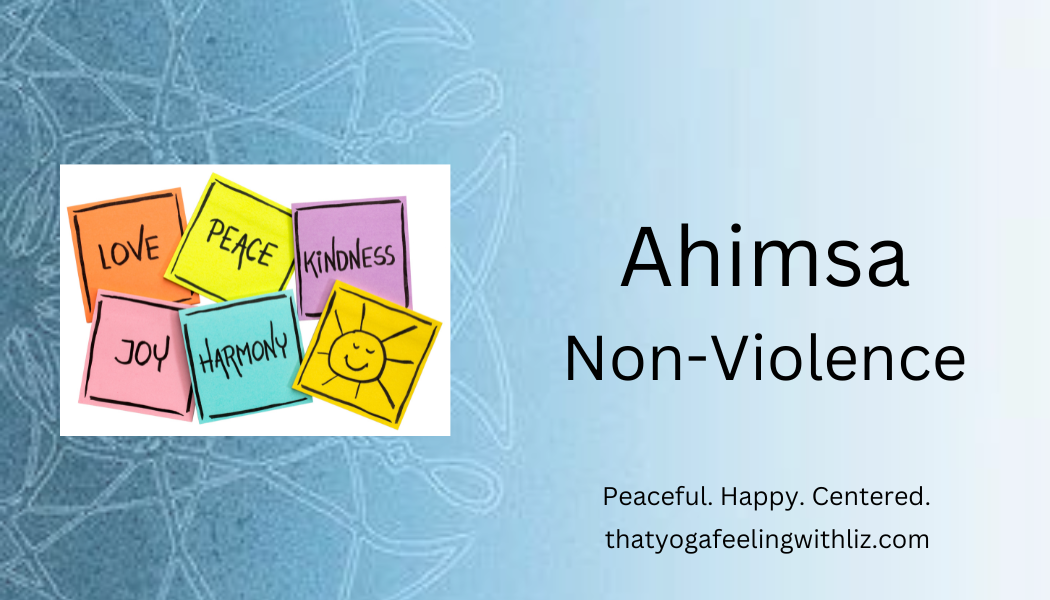
Ahimsa/Non-Violence
Elizabeth Adolphson | SEP 25, 2023
yoga
yamas
yoga philosophy
nonharming
Ahimsa/Non-Violence
Elizabeth Adolphson | SEP 25, 2023
The Yamas, the first limb of the 8 limbs of yoga.
There are five restraints or disciplines in the first limb.
“The yamas must not be thought of as moral commandments but as skillful ways to relate to the world without adding to its suffering or ours.” – Chip Hartranft
The first Yama is AHIMSA meaning non-violence. (A=non, HIMSA=violence)
On our mats, we practice Ahimsa by honoring our bodies and what they can and cannot do. We don’t push, strain, or force our bodies into poses. We allow our bodies to find the steadiness and ease in each pose. Also, we practice non-violence on our mat by not beating ourselves up mentally because our pose looks different than the instructors or the student on the mat next to us, or thinking we are not good enough or flexible enough to practice yoga. We are gentle and accepting of what we can do. In yoga, we just observe and not judge.
There are many ways we can practice non-violence/ahimsa in our lives both on the mat and off the mat.
Actions: no bullying, no physical abuse towards others or ourselves. This could also include overindulging in any activity. I had a friend who realized his nightly big bowl of ice cream was an act of violence against his body. He stopped that habit and lost over 50 pounds.
Words: name calling, verbal abuse towards others or ourselves. It is mentally and emotionally harmful to tell someone that they are not good enough or something like that. There are better ways to get a point across than using these types of blanket statements. When I was a member of Toastmasters International, we practiced giving speech evaluations. We were coached to find three things we liked about the speech, two things that could be improved, and one way to challenge yourself in your next speech. It was all about constructive criticism and coaching to bring out the best in the speaker.
Thoughts: What thoughts are you having about others and yourself? Do you beat yourself up with negative, harmful thoughts if you do something wrong? “I shouldn’t even try to do X because I am so bad at it.” Are your thoughts and the words you speak to yourself positive and growth-oriented?
The practice of Ahimsa/non-violence is universal. It transcends place, ego, gender, or circumstance.
Ponder these questions:
Are your actions hurting yourself or others?
Are your words hurting yourself or others?
Are your thoughts hurting yourself or others?
Elizabeth Adolphson | SEP 25, 2023
Share this blog post
 OfferingTree